
By Sofia | Loop & Twine
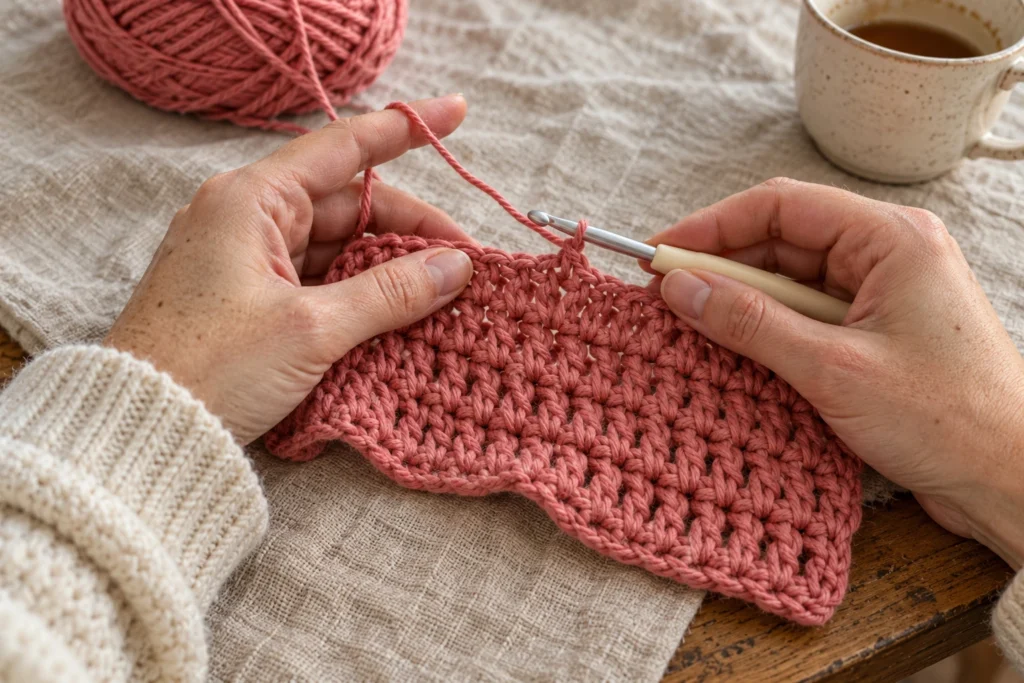
Learning Double Crochet opens the door to soft scarves, relaxed blankets, airy shawls, and many classic crochet patterns. Its tall shape gives your fabric movement, and the repeating motion becomes easy to remember with practice. If you already know how to make a chain, you have a useful starting point for this stitch — if chains are still new to you, start with our beginner’s guide to your first stitches.
In this Loop & Twine guide, we will build a small practice swatch, learn how to recognize each part of the stitch, and keep the same number of stitches from row to row. Take the steps slowly at first. Your first goal is to understand where the hook goes and what happens to the loops.
What Is Double Crochet?
Double Crochet is a basic crochet stitch usually abbreviated dc in US patterns. It creates a taller post than single crochet or half double crochet — see our complete guide to basic crochet stitches if you want to compare them side by side. That extra height helps rows grow quickly and gives the fabric more space between stitches.
The stitch begins with a yarn over before you insert the hook. After drawing up a loop, you finish the stitch in two stages: pull yarn through two loops, then pull yarn through the last two loops. One loop remains on the hook when the stitch is complete.
This entire tutorial uses US crochet terminology. In UK terminology, this same stitch is called treble crochet. A UK double crochet is the stitch called single crochet in US terminology. Check the terminology note before following any pattern, especially when switching between websites or books.
Supplies for Your Practice Swatch
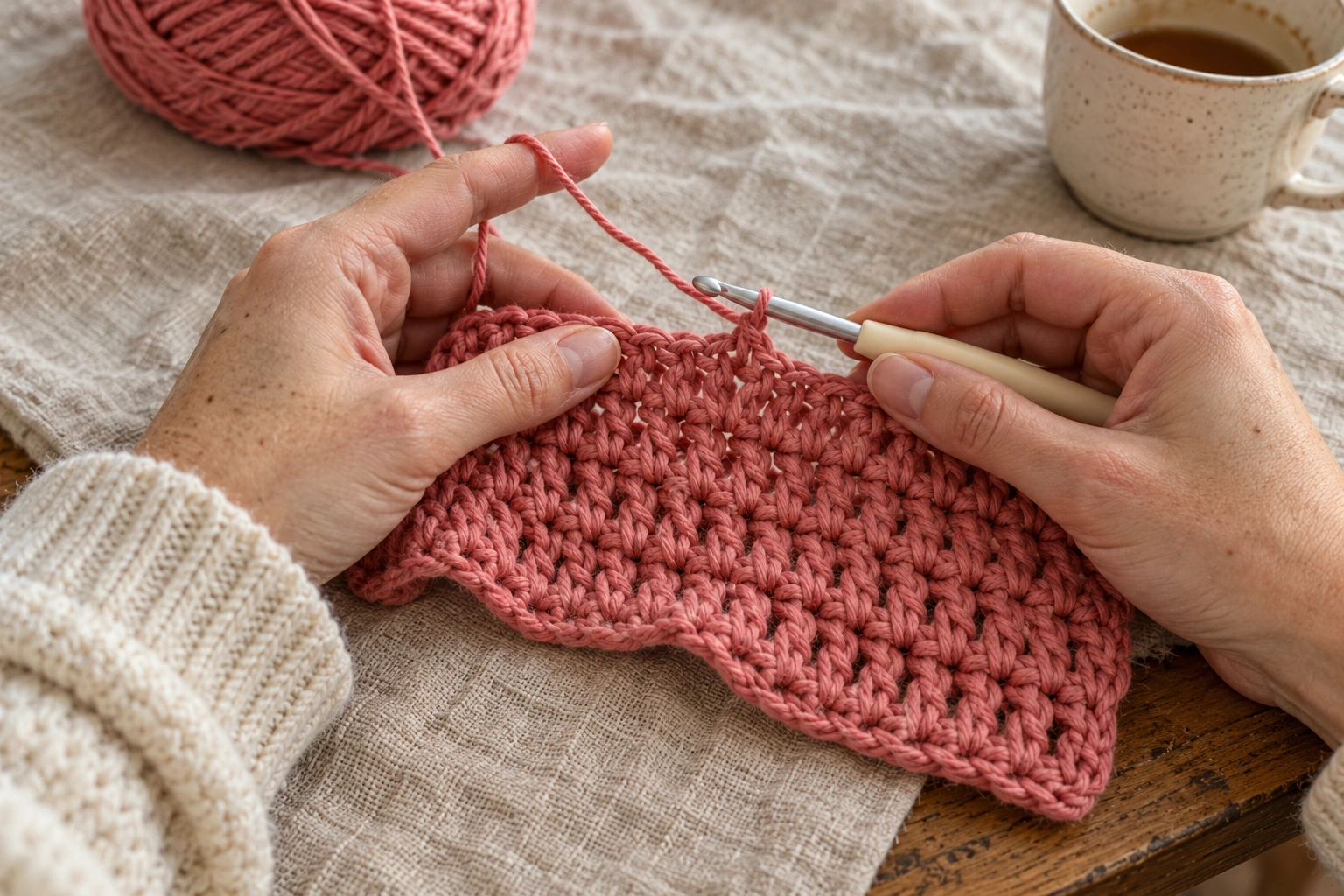
- Smooth, medium-weight yarn in a light or medium solid color. Dusty rose yarn is used in the illustrations.
- A crochet hook suitable for your yarn; a 5 mm hook is a practical starting point for many medium-weight yarns, but always check the yarn label against a standard hook size and yarn weight chart.
- Two removable stitch markers.
- Scissors and a yarn needle for finishing.
Avoid very fuzzy, dark, or heavily textured yarn for your first attempt. You want to see the loops clearly. Cotton gives defined stitches, while smooth acrylic can be comfortable and forgiving. You only need a small amount for a swatch, so a leftover ball is fine.
Choose a comfortable position with enough light to see the top of your stitches. Let the yarn move through your fingers without gripping it tightly. If your shoulders or hands start to tense, pause and loosen your hold before continuing.
Crochet Abbreviations Used Here
| Abbreviation | Meaning |
|---|---|
| ch | chain |
| dc | double crochet, US terminology |
| yo | yarn over |
| st / sts | stitch / stitches |
A yarn over means bringing the working yarn over the hook so the hook can catch it. The working yarn is the strand connected to your ball; the short loose end is the yarn tail. Keeping these strands separate makes the first row easier to manage. For the full list of abbreviations, hook sizes, and yarn weights, see our crochet basics reference guide.
Before You Begin: Our Stitch-Counting Method
For this tutorial, the chain 3 counts as one Double Crochet stitch. We will use that rule throughout the practice swatch. Other patterns may use a different turning chain or may say that the turning chain does not count. Follow the rule stated in the pattern you are making.
Our swatch has 12 stitches in every row. In the first row, that means 11 actual dc stitches plus the three skipped starting chains, which count together as one stitch. In later rows, it means the turning chain plus 11 actual dc stitches.
Place a marker in the top chain of each new turning chain. This marks the place where the last stitch of the following row will go. It is a small habit that makes the row ends much easier to find.
How to Double Crochet Step by Step
Step 1: Make Your Foundation Chain
Make a slip knot and place it on your hook. The loop should slide comfortably along the shaft. Chain 14 to begin the 12-stitch practice swatch. Keep the chains loose enough for your hook to enter without forcing it.
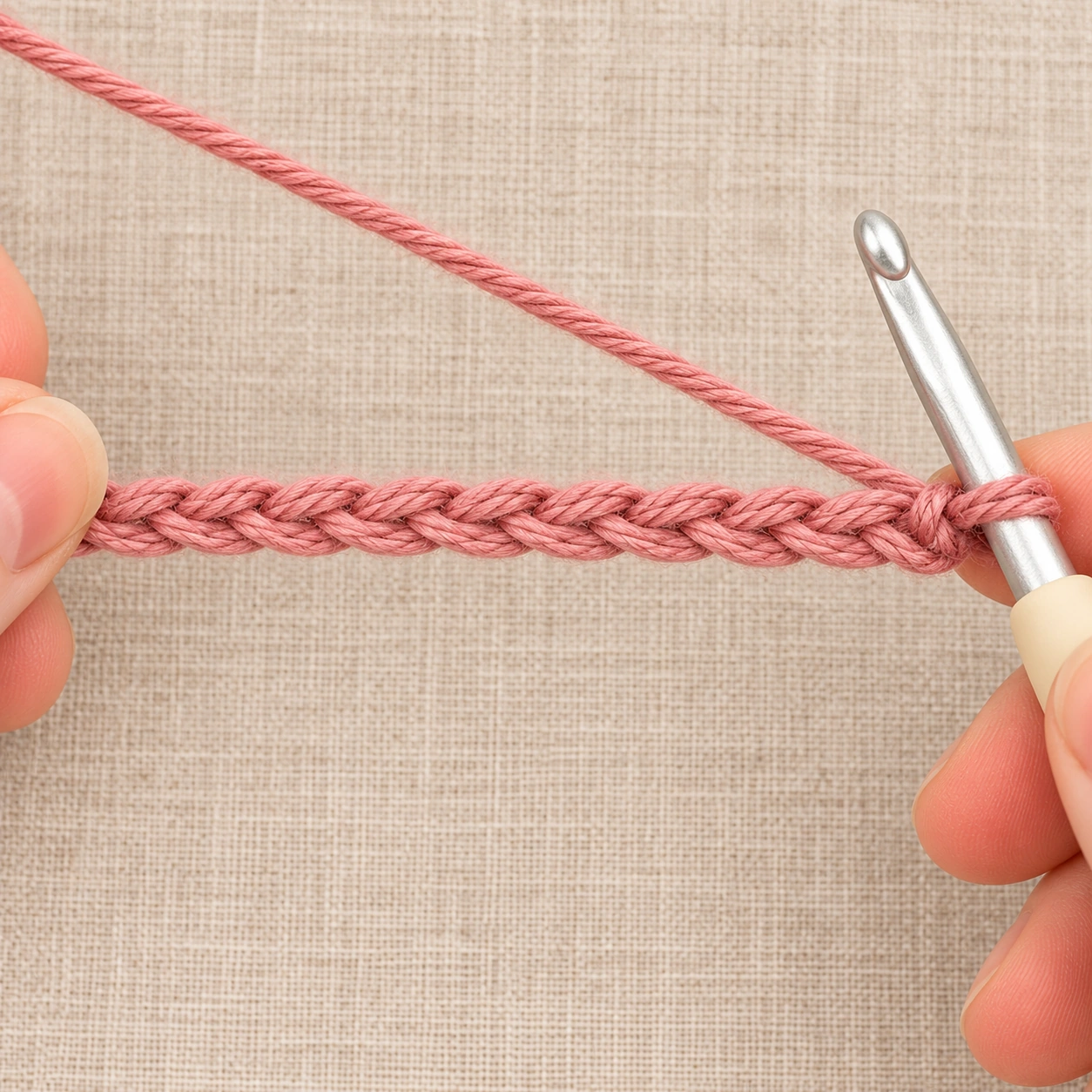
The loop currently sitting on your hook does not count as a chain. Starting with the chain closest to the hook, count back to the fourth chain. You will make your first dc into this chain. The three chains you skip form the height at the beginning of the row and count as the first stitch.
Step 2: Yarn Over and Insert the Hook
Wrap the working yarn over the hook once. Keep this wrap on the shaft as you insert the hook into the fourth chain from the hook. Hold the foundation close to the insertion point so it does not twist away from you.
You can work under the back bump of the chain for a neat foundation edge, or use a consistent loop placement that is easier for you to see. Choose one method for the whole row. The key is to enter each chain once without splitting the yarn.
Step 3: Pull Up a Loop
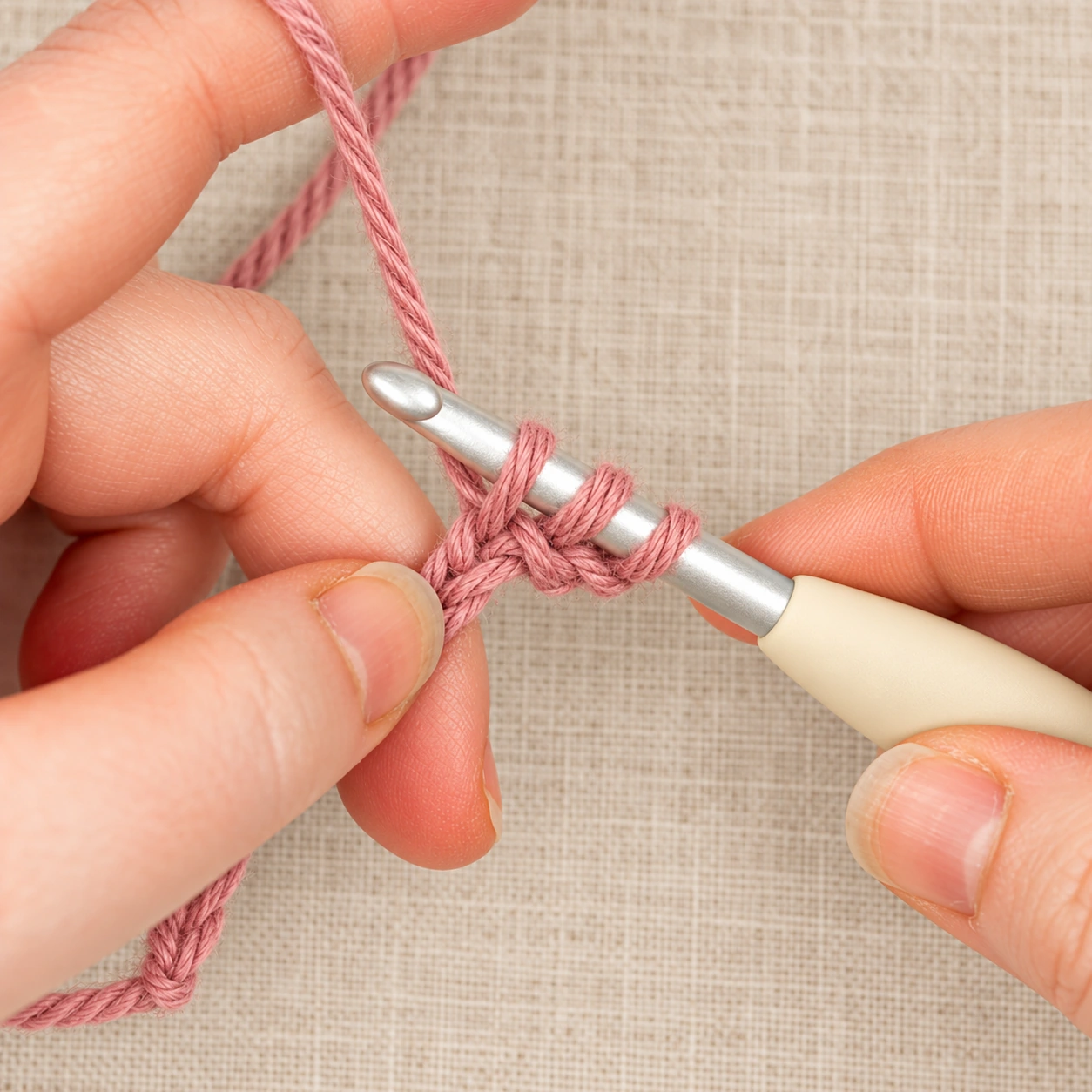
Yarn over again and draw that yarn back through the chain. You should now have three loops on the hook. Pause here and check them before moving on. If you see only two, you may have missed the first yarn over.
Keep the new loop relaxed rather than stretching it high above the chain. A very long loop makes a loose, uneven post; an extremely tight loop makes the next movement difficult. Aim for a comfortable height that lets the hook slide through smoothly.
Step 4: Pull Through the First Two Loops
Yarn over and draw the yarn through two loops only. Two loops should remain on the hook. Turning the hook opening slightly downward can help it pass through without catching an extra strand.
Do not pull through all three loops at once. That would change the stitch you are making. Double Crochet has two separate pull-through stages, and this is the first of them.
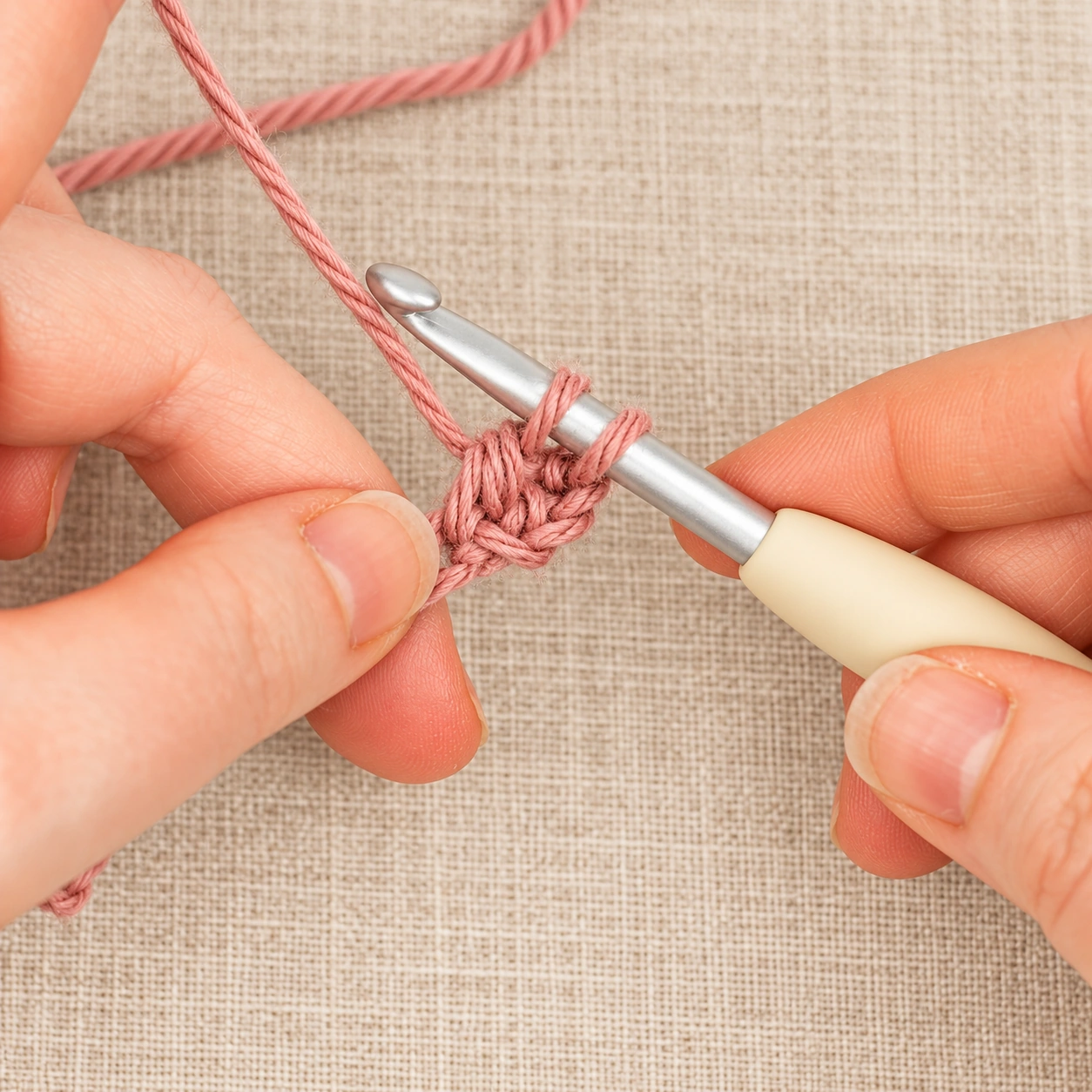
Step 5: Pull Through the Remaining Two Loops
Yarn over once more and pull through the two remaining loops. You now have one loop on the hook, and your first actual dc is complete. Look below the hook: you should see a tall post rising from the foundation chain.
Try saying the rhythm as you work: yarn over, insert, pull up a loop; pull through two, pull through two. Repeating this sequence helps you remember the movements without rushing.
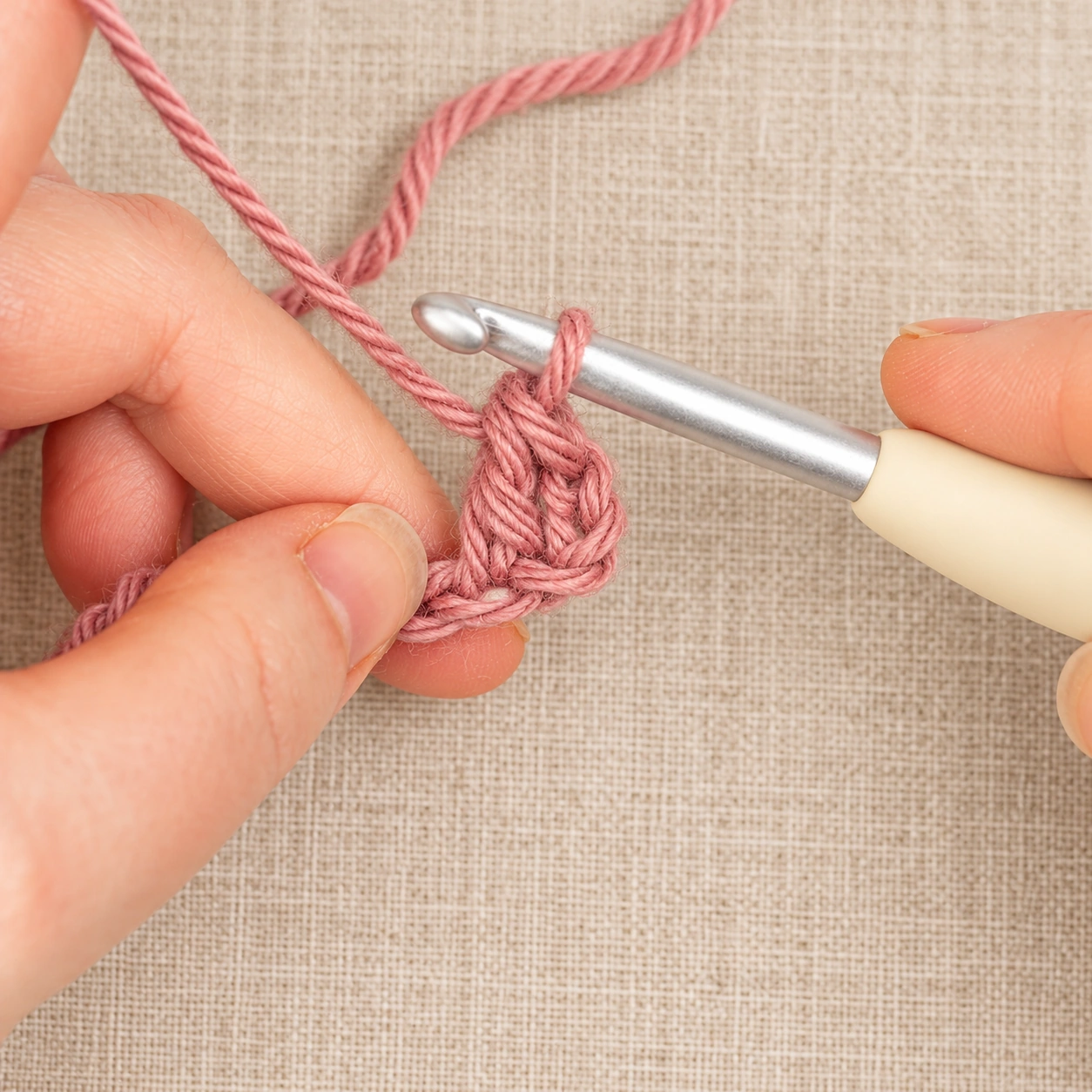
Step 6: Finish the First Row
Make one dc in each remaining foundation chain. There are 10 chains left after the first insertion, so you will add 10 more dc stitches. Together with the first actual dc, that gives you 11 actual dc stitches. Add the skipped chain-3 at the beginning, and the row totals 12 stitches.
Count before starting the next row. Each completed dc has a small V at its top. Count each V once, then include the starting chain-3 as one stitch. Finding a missed chain now is much easier than discovering a narrowing swatch several rows later.
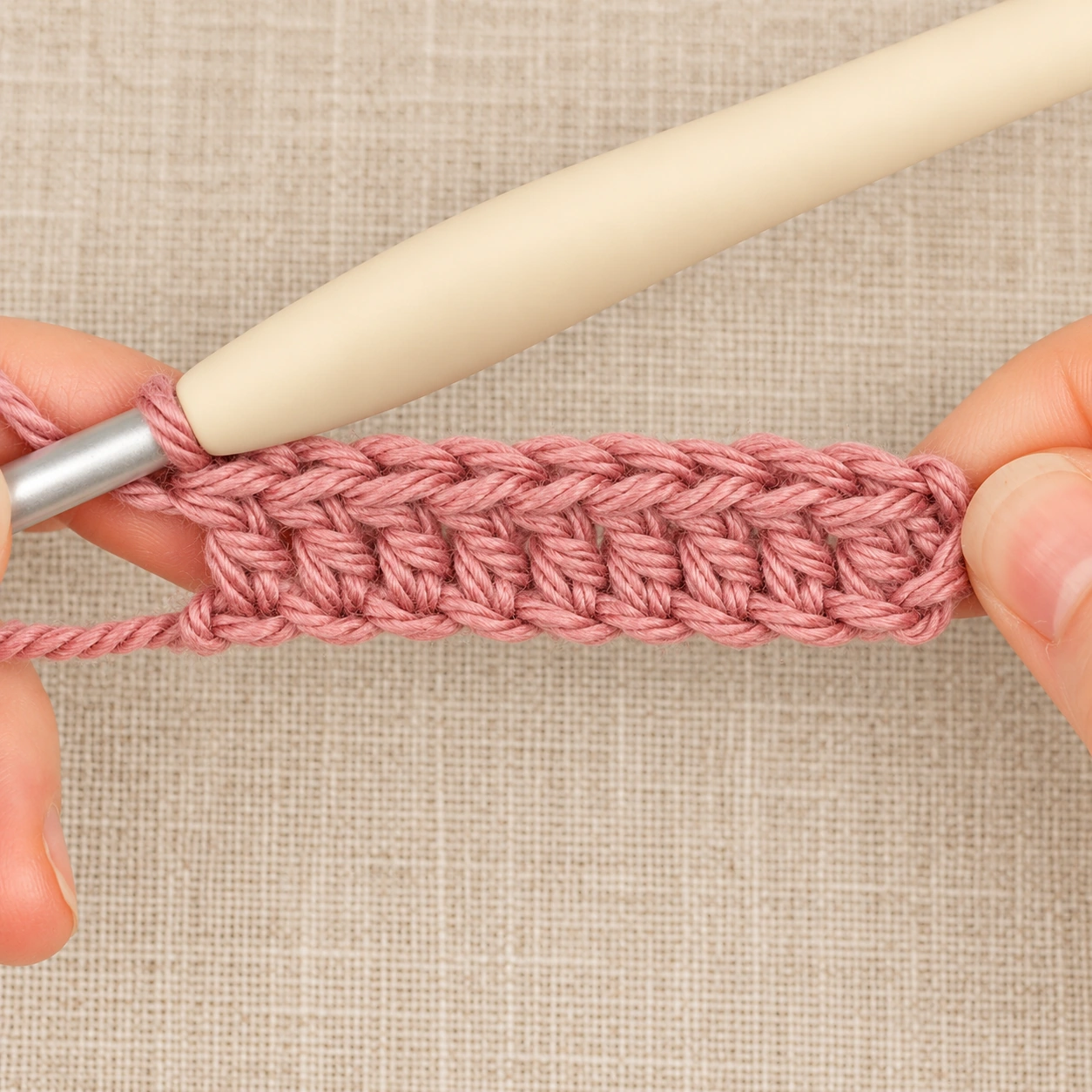
How to Start the Second Row
Chain 3 and turn your work. Mark the third chain you just made. This chain-3 counts as the first stitch of the new row.
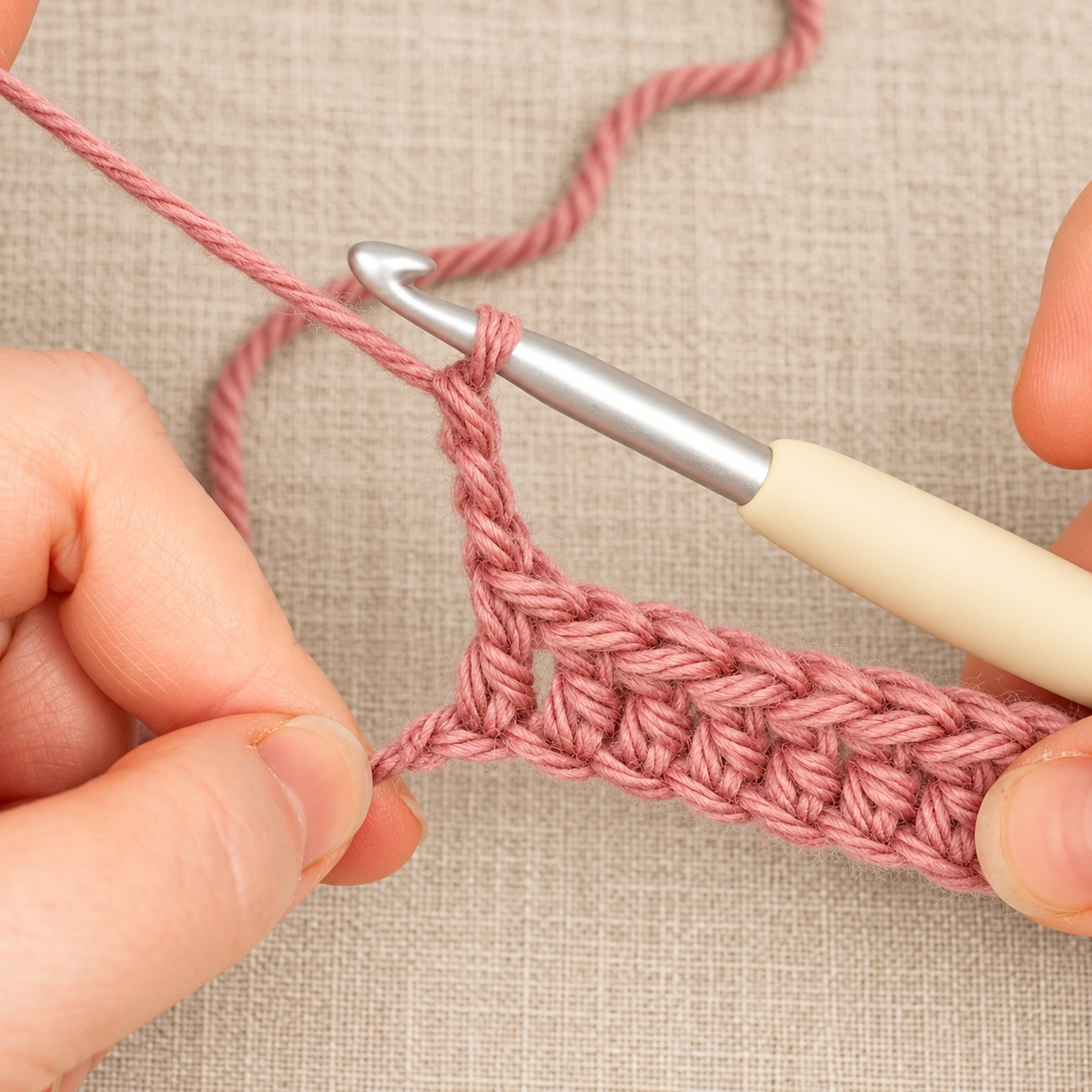
Skip the first stitch directly beneath the turning chain. Make your first actual dc in the next stitch.
For this row, insert your hook under both loops of the V at the top of each stitch. Working under only one loop changes the texture and is usually reserved for patterns that specifically ask for it.
Yarn over, insert your hook under both top loops of that next stitch, yarn over again, and pull up a loop. You should have three loops on the hook.
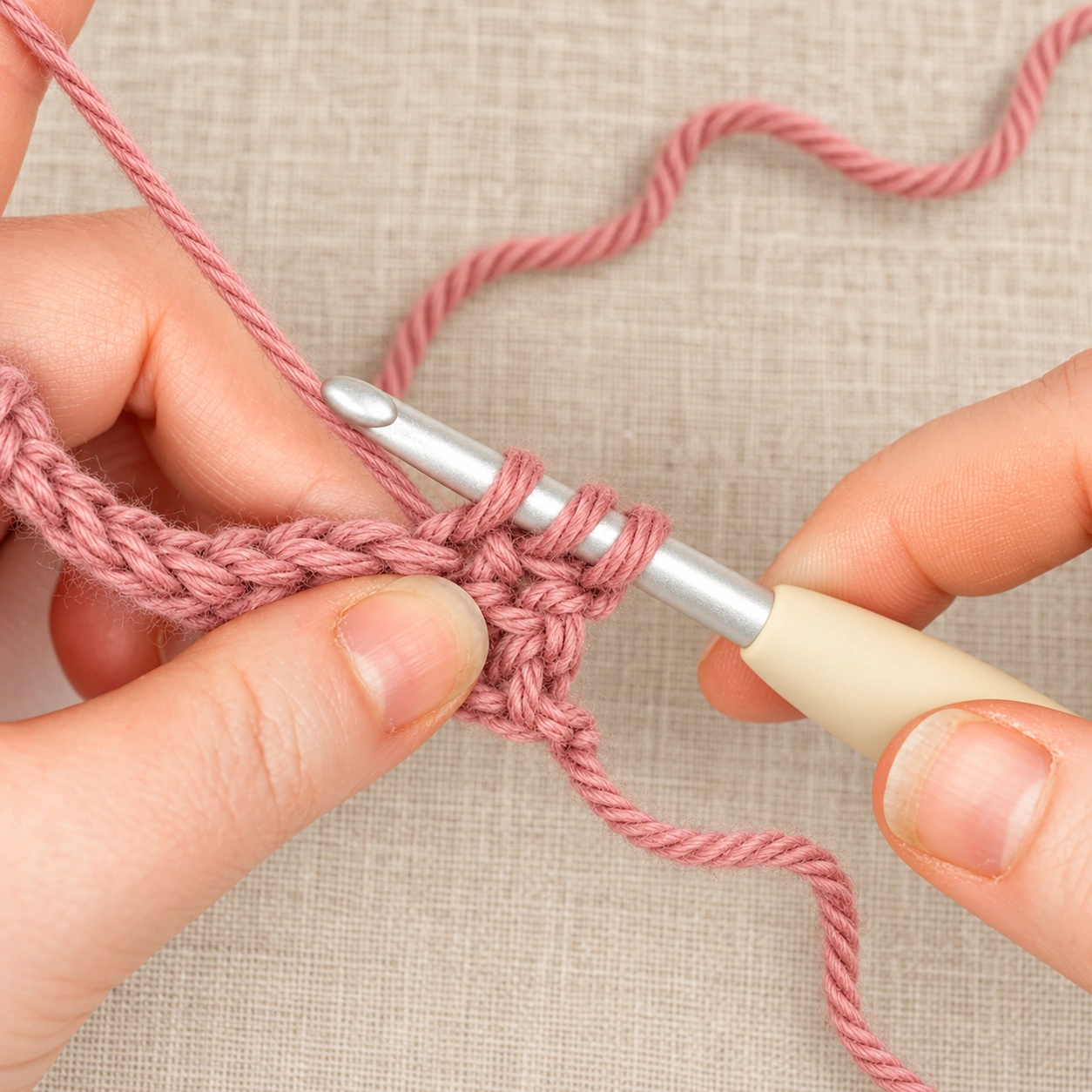
Yarn over and pull through the first two loops, leaving two loops on your hook.
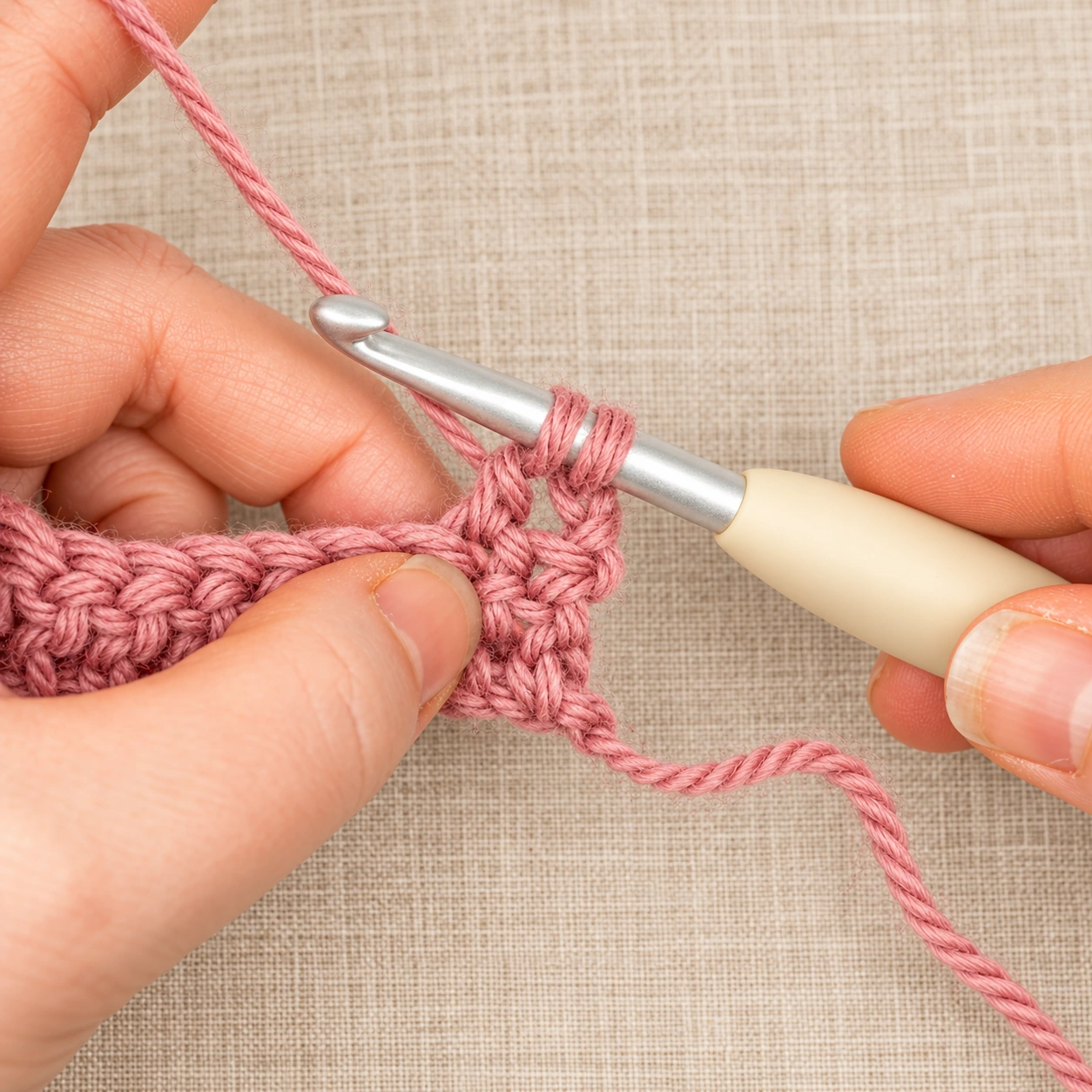
Yarn over and pull through the remaining two loops. One live loop remains. Your first actual Double Crochet of the second row is complete; together with the turning chain, you now have two counted stitches.
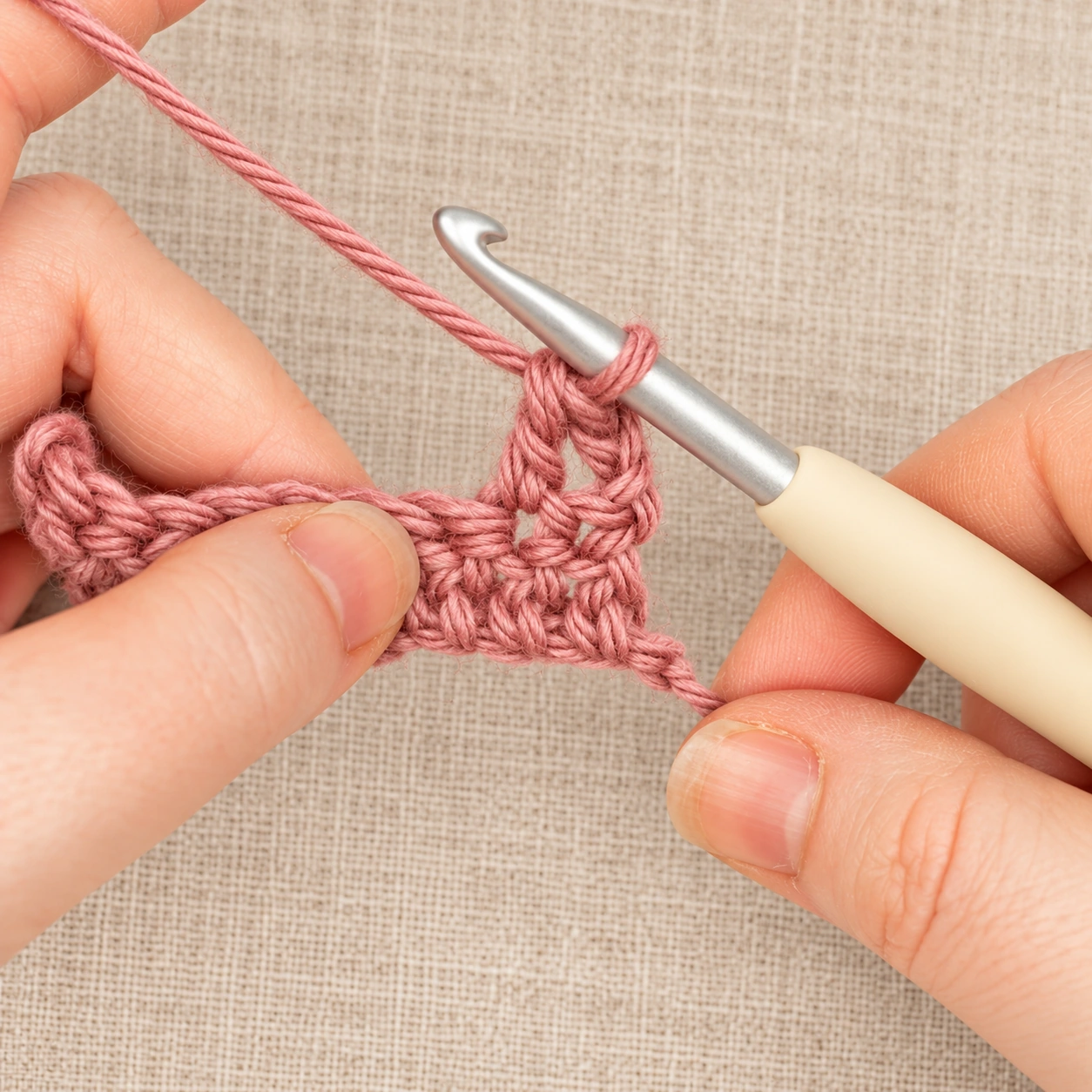
Continue with one dc in each actual dc across the row. Finally, work your last dc into the top of the beginning chain-3 from the previous row. That last insertion is easy to overlook because a chain looks different from the top of a dc.
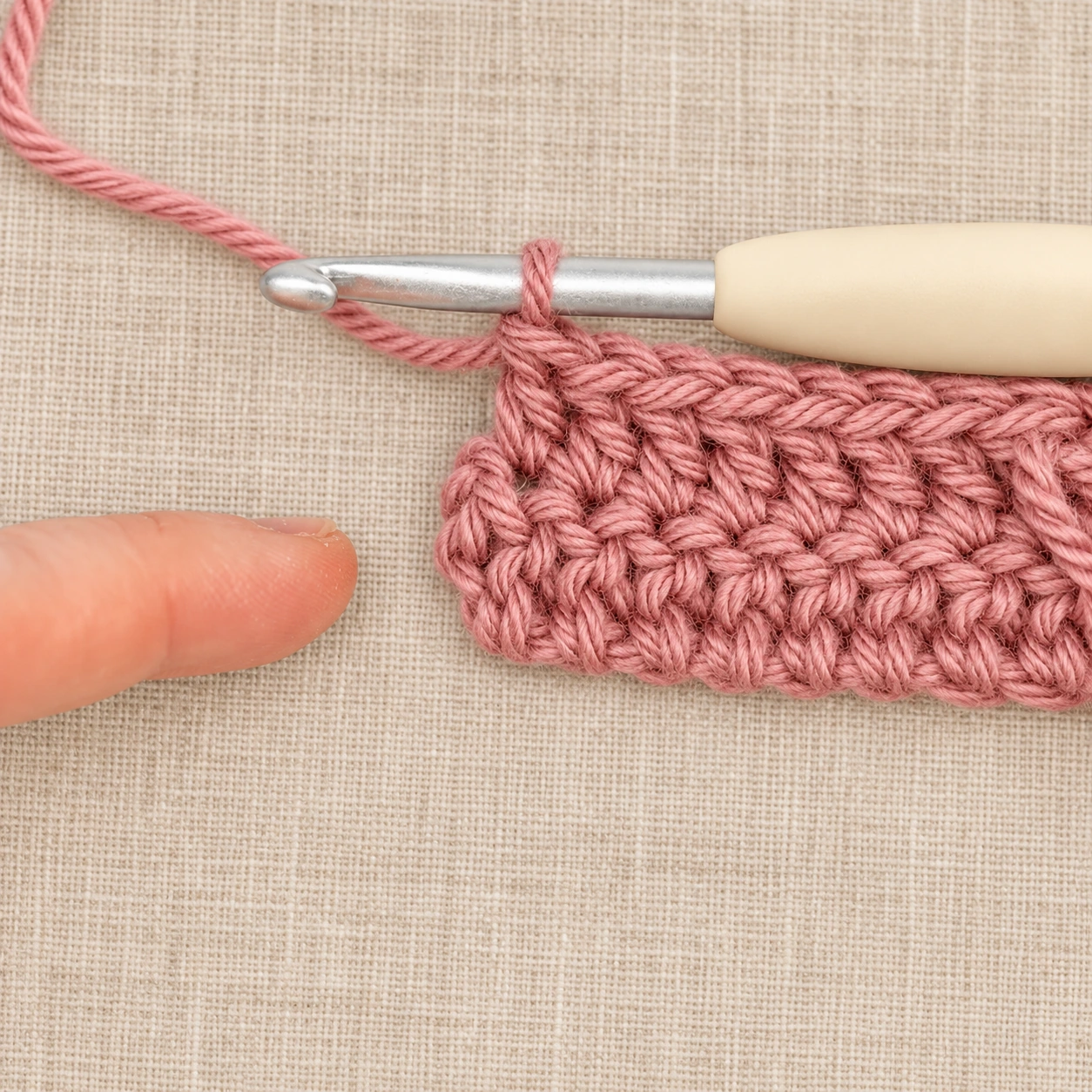
Count again: one turning chain counted as a stitch, plus 11 actual dc stitches, equals 12 stitches. Move your markers as you work so each row end remains easy to identify.
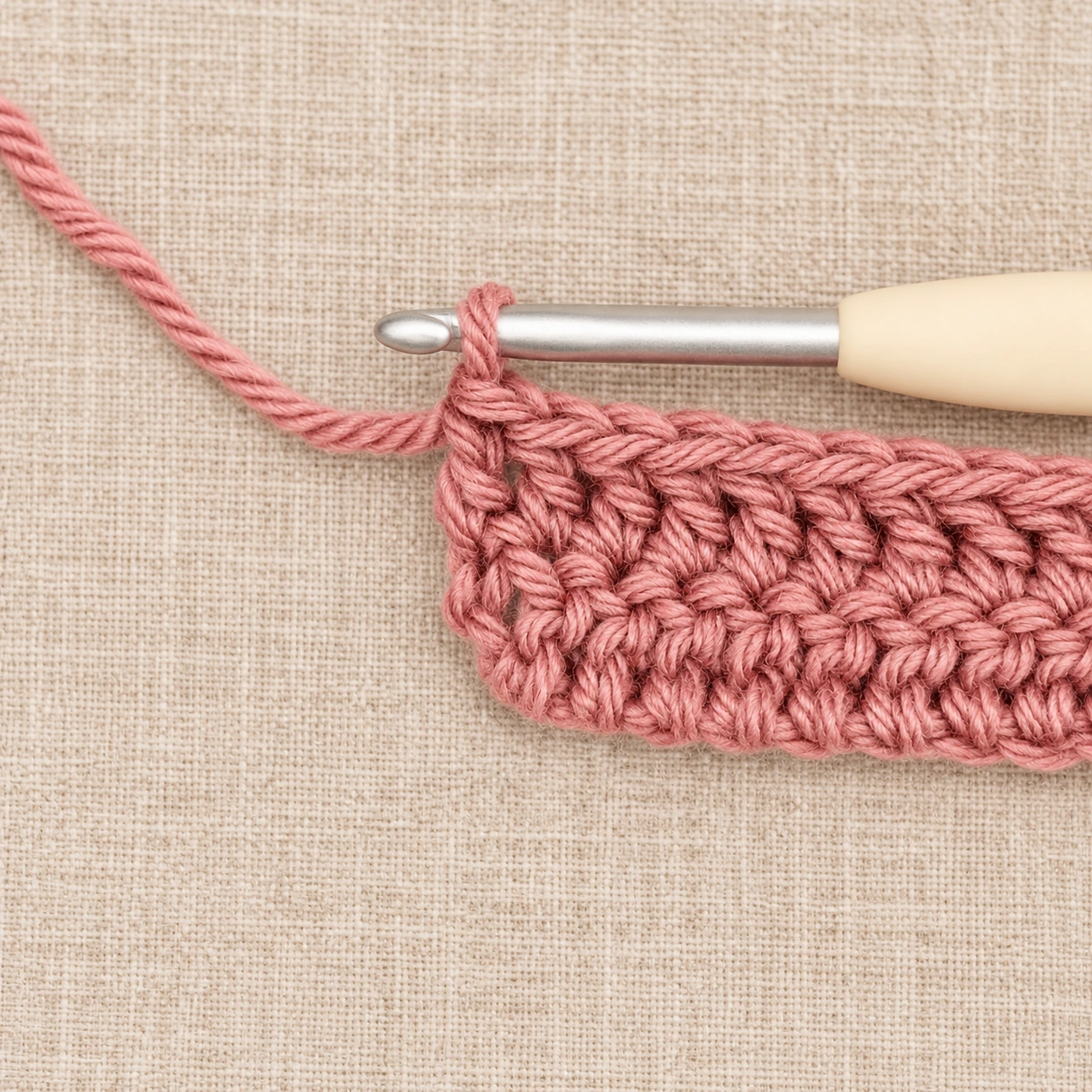
Simple Double Crochet Practice Swatch
Use this short pattern once the individual movements feel familiar:
Foundation: Ch 14.
Row 1: Dc in the fourth ch from the hook and in each remaining ch. The skipped ch-3 counts as one stitch. 12 sts.
Row 2: Ch 3, turn. Skip the first st. Dc in each remaining st, working the last dc into the top of the previous row’s beginning ch-3. 12 sts.
Rows 3–6: Repeat Row 2. 12 sts in every row.
To finish, cut the yarn with a tail long enough to weave in, pull the tail completely through the final loop, and snug it gently. Thread the tail onto a yarn needle and weave it through the fabric in more than one direction. Avoid pulling so tightly that the corner puckers.
This is a learning swatch, so there is no required finished size or gauge. Compare your first and last rows instead: are the posts becoming more even, and is the hook moving more comfortably? Those are useful signs of progress.
Common Double Crochet Problems and How to Fix Them
My Swatch Gets Wider
Extra stitches often appear at row beginnings. With our method, the chain-3 already counts as the first stitch. Adding another dc into the first stitch underneath it creates an increase. Check that you skip that stitch and count each finished row before turning.
My Swatch Gets Narrower
The final stitch is often missing. Look for the top of the previous row’s turning chain and make sure you work into it. Marking this chain as soon as you create it removes much of the guesswork. If you discover a mistake, undo the affected section and restore the stitch count.
My Edges Have Small Gaps
A chain-3 turning chain can leave a visible space beside the next dc. First check that the chain is not much looser than the rest of the fabric. Some patterns use chain 2 or a chainless starting stitch for a different edge, but keep one consistent method while learning this swatch.
My Hook Keeps Catching the Yarn
Check whether you are splitting the strand during insertion. Slow down and pass through the intended opening. Also keep the loops on the full shaft of the hook rather than tightening them around its narrower throat. A relaxed grip often makes pull-throughs easier.
My Stitches Are Different Heights
Watch the loop you draw up before the first pull-through. Keep that movement consistent. Uneven tension usually improves with short practice sessions, so make a few calm rows rather than forcing yourself through a long session with tired hands.
What Can You Make With Double Crochet?
Once you can keep a straight rectangle, try a simple scarf or a small blanket square. These projects repeat the same movements and give you space to develop even tension. A scarf can also help you learn how different yarns change the drape of the same stitch. Before buying yarn for a bigger project, our free crochet calculators can help you work out how many skeins you will need and roughly how long it will take.
Double Crochet is also used in granny squares, shell patterns, and many textured combinations. Those designs introduce extra instructions such as chain spaces, groups of stitches, or working in rounds. Learn the basic stitch first, then add one new technique at a time.
When choosing a first project, check the entire pattern before starting. Confirm the terminology, yarn weight, hook size, stitch count, and whether the turning chain counts. These details matter more than matching the color in a photograph.
Double Crochet Video Tutorial
Frequently Asked Questions
Is Double Crochet Suitable for Beginners?
Yes. It involves a few more movements than single crochet, but its taller posts are useful for learning to recognize stitches. Start with chains and a small swatch, then focus on repeating the same loop sequence.
How Many Loops Should Be on the Hook?
After drawing up a loop, there are three. After the first pull-through-two, there are two. After the second pull-through-two, there is one. This 3 → 2 → 1 sequence is a helpful checkpoint whenever something feels wrong.
Does the Turning Chain Always Count?
No. It counts in this tutorial, but other patterns use different rules. If a pattern says the turning chain does not count, the first and last stitch placements will differ from the method here. Read the pattern notes before beginning.
Can I Use a Different Yarn Color?
Absolutely. Choose any color you enjoy, but a smooth solid shade makes the stitch structure easier to see. Once you recognize the top Vs and row ends confidently, experiment with darker colors or more decorative yarns.
Keep Practicing With Loop & Twine
Keep your first swatch as a reference, even if its edges are a little uneven. Make another after a few practice sessions and compare the stitch heights and row ends. Small improvements become much easier to notice when you can hold both pieces side by side.
Save this Double Crochet guide for your next project, and visit Loop & Twine for more crochet inspiration. Your next step is simple: pick up your hook, make a small foundation chain, and give yourself time to enjoy the rhythm.
Keep learning: New to a technique used here? See our beginner guide to crochet increases and decreases.