
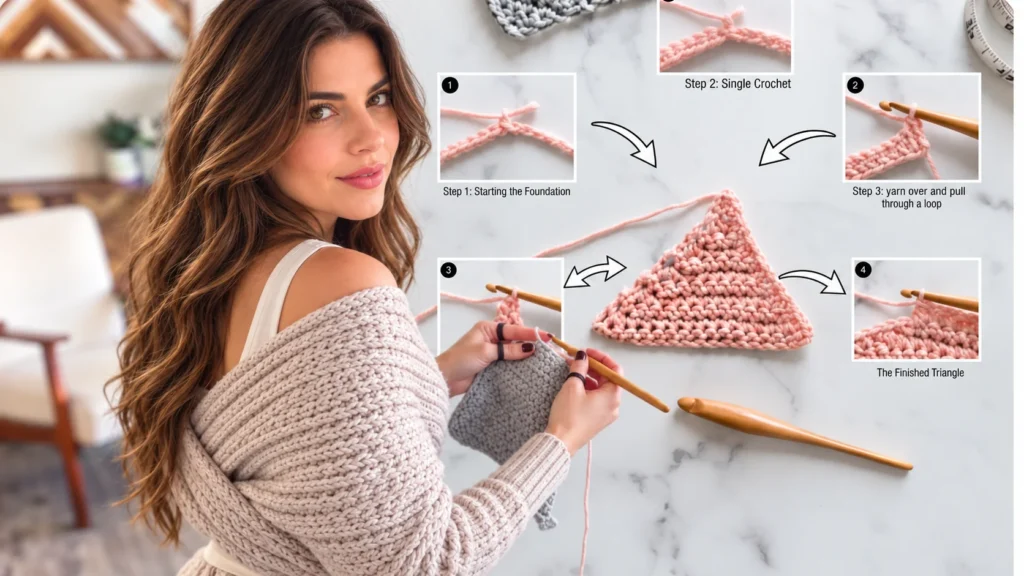
Crochet increases and decreases are the two techniques that take you from flat squares to real shapes. Hey there, Sofia here from Loop & Twine! If you’ve mastered the basic crochet stitches, you can already make scarves, dishcloths, and all the flat squares and rectangles your heart desires. But the moment you want to make amigurumi toys, a cozy sweater, a sturdy basket, or a shaped bag, there’s one more skill to add to your toolbox: shaping.
Quick answer: In crochet, an increase means working two or more stitches into the same stitch. It adds a stitch and makes your fabric wider. A decrease means joining two stitches into one, for example with sc2tog. It removes a stitch and makes your fabric narrower. You use both to turn flat pieces into circles, curves and amigurumi shapes.
| Increase | Decrease | |
|---|---|---|
| What it does | Adds a stitch | Removes a stitch |
| Effect on the fabric | Wider, flares outward | Narrower, curves inward |
| How it is worked | 2 or more stitches in the same stitch | 2 stitches worked together (sc2tog, hdc2tog, dc2tog) |
| Pattern abbreviation | inc | dec, or [stitch]2tog |
| Common uses | Flat circles, toy bases, flared edges | Closing the top of a toy, shaping hats and sleeves |
If you haven’t picked up a hook before, start with our beginner’s guide to crochet — increases and decreases build directly on those first stitches.
Shaping simply means adding or removing stitches as you work — and it sounds trickier than it is. In this beginner-friendly guide with step-by-step photos, I’ll walk you through how to increase and decrease in single crochet, half double crochet, and double crochet, all worked in rows.
Affiliate disclosure: this post may contain affiliate links. If you buy through them, I may earn a small commission at no extra cost to you.
Crochet Increases and Decreases: What “Shaping” Means
Here’s the beautiful simplicity of it: to make your fabric wider, narrower, or curved, you just add or skip stitches as you move along a row. Removing or adding stitches lets the remaining fabric travel in new directions, taking advantage of crochet’s natural 3D flexibility.
With shaping, you can add handles to a basket, curve armholes and necklines on garments, build fun appliqué shapes for wall decor, and so much more. One important habit: most patterns tell you exactly which increase or decrease method to use, so always read the Notes section before you start.
How to Increase in Crochet
When you crochet in rows, you normally work one stitch into each stitch of the previous row — that’s what keeps your stitch count (and your shape) steady. To increase, you simply work two or more stitches into a single stitch from the row below.
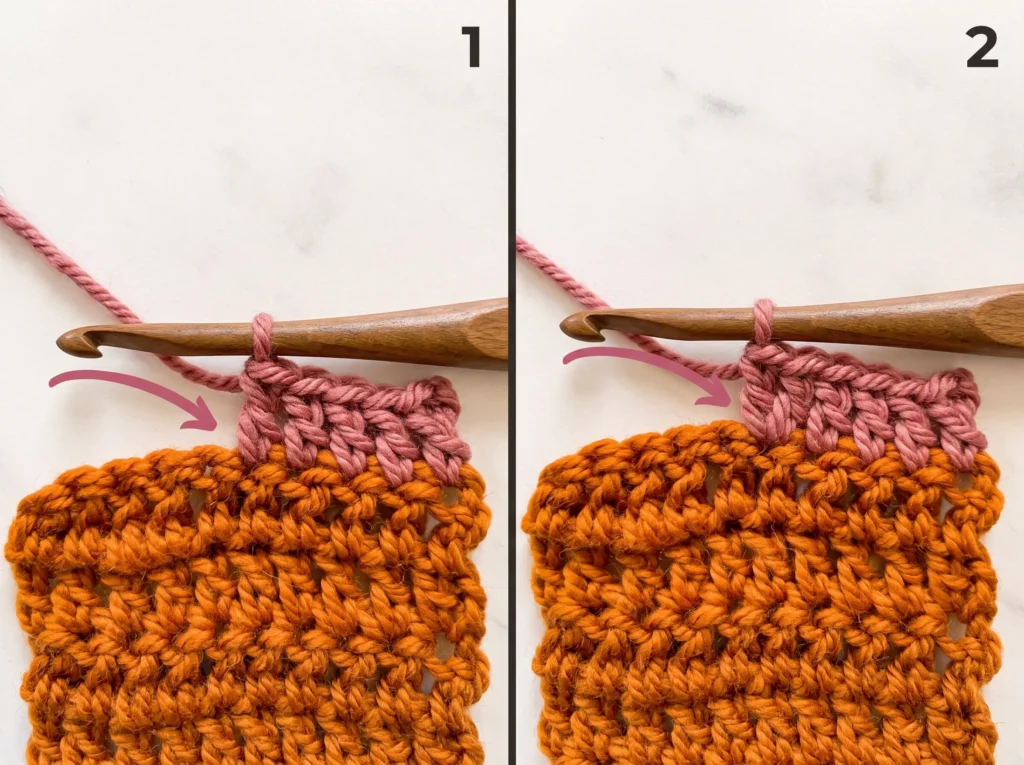
Steps 1-6: working the increase into the stitch below, then completing the second double crochet in the same spot.
A closer look at both double crochet stitches sharing the same base stitch.
The same double crochet increase, worked in the round instead of in rows.
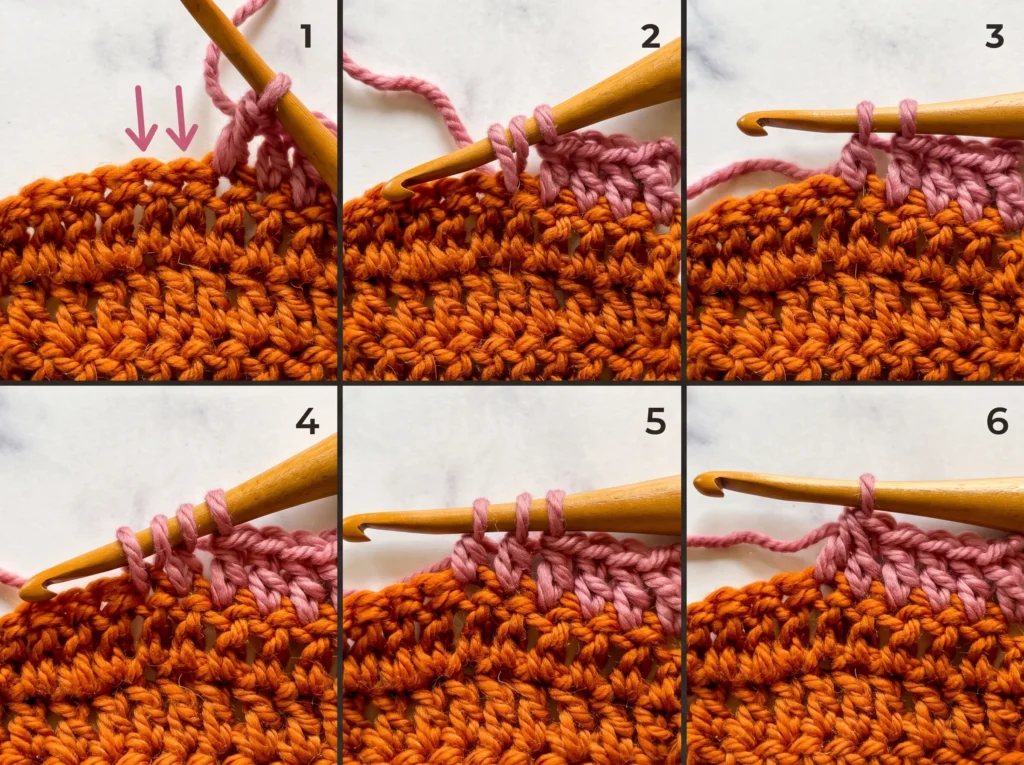
Left: one double crochet worked into the stitch below. Right: two double crochet worked into the same stitch — that’s one increase made.
Where should increases go in the row?
Anywhere you like! Increases can sit at the very start of a row, the very end, or anywhere in between:
- Placing them at the beginning or end of rows makes the fabric grow wider on that side.
- Placing them in the middle of a row makes the fabric bow or fan out at that point.
Does the increase method change for different stitches?
Nope — my example uses double crochet, but the same principle works for single crochet, half double crochet, and any stitch that’s worked into the stitch below. Just work two of the same stitch into that one space, and you’ve made your increase.
Video: Double Crochet Increase Tutorial
Watching the increase worked stitch-by-stitch makes it click much faster than reading alone:
How to Decrease in Crochet
A crochet decrease means working two stitches together — two stitches become one. The exact technique depends on the stitch you’re using, but the goal is always the same.
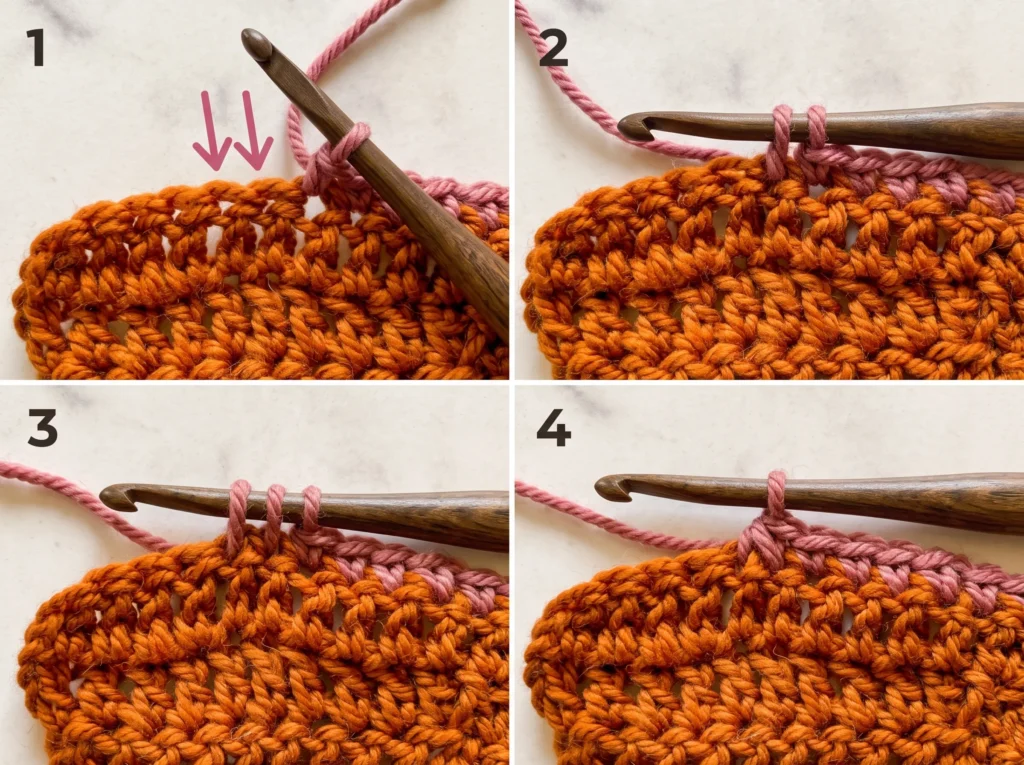
Single Crochet Decrease (sc2tog)
- Find the two stitches you want to decrease across.
- Insert your hook into the first stitch and pull up a loop (2 loops on hook).
- Insert your hook into the second stitch and pull up a loop (3 loops on hook).
- Yarn over and pull through all 3 loops on the hook.
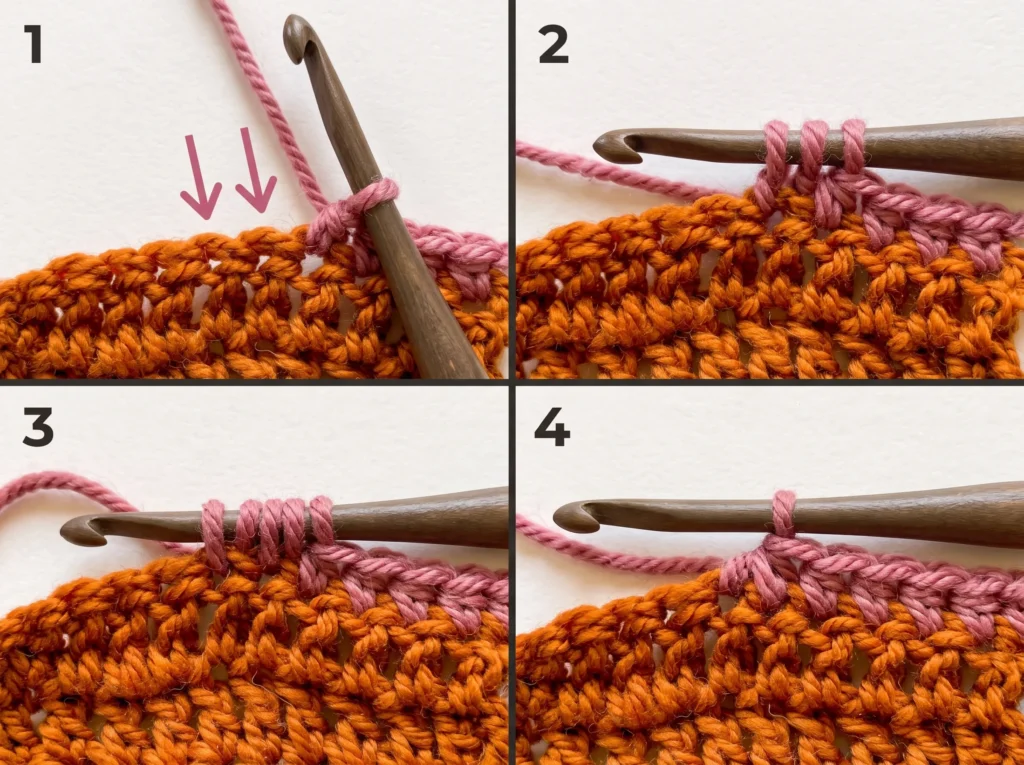
Half Double Crochet Decrease (hdc2tog)
- Find the two stitches you want to decrease across.
- Yarn over, insert your hook into the first stitch and pull up a loop (3 loops on hook).
- Yarn over, insert your hook into the second stitch and pull up a loop (5 loops on hook).
- Yarn over and pull through all 5 loops on the hook.
Double Crochet Decrease (dc2tog)
- Find the two stitches you want to decrease across.
- Yarn over, insert your hook into the first stitch and pull up a loop (3 loops on hook).
- Yarn over and pull through 2 loops (2 loops on hook).
- Yarn over, insert your hook into the second stitch and pull up a loop (4 loops on hook).
- Yarn over and pull through 2 loops (3 loops on hook).
- Yarn over and pull through all 3 loops on the hook.
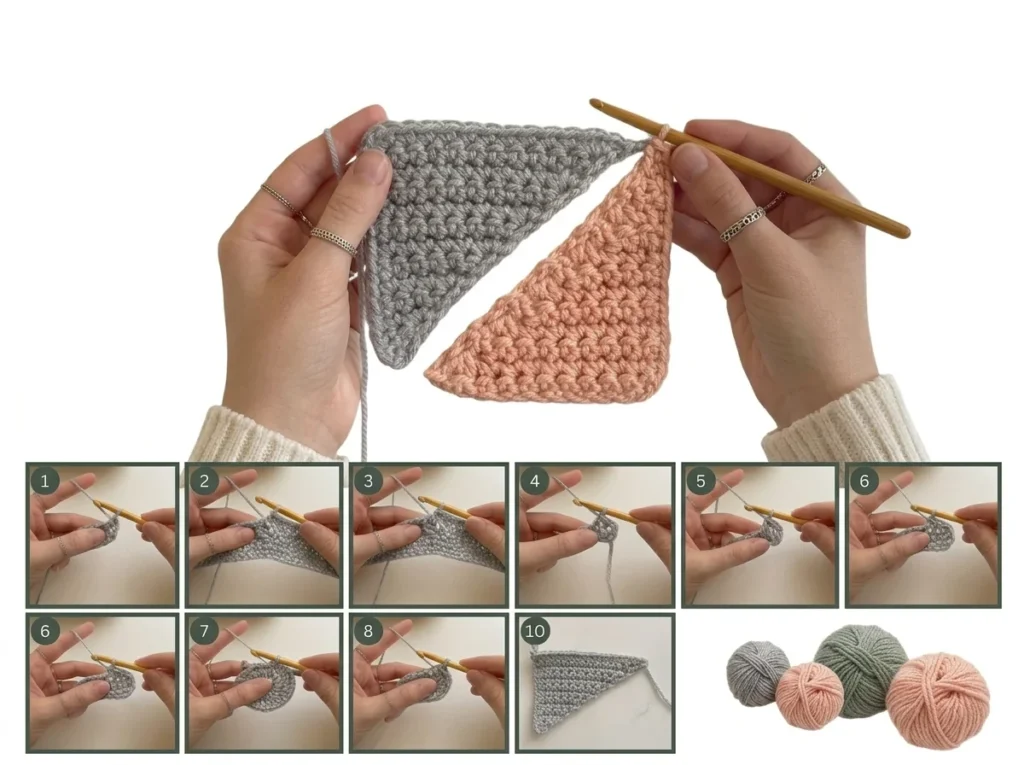
Video: Invisible Decrease for Amigurumi
If you’re shaping amigurumi rather than a garment, the invisible decrease (worked through the front loops only) is usually the better choice — here’s how it looks in motion:
Sofia’s Tips for Perfect Shaping
- Count after every row. Shaping changes your stitch count on purpose — keep track so you know whether you hit the target number.
- Read the pattern notes first. Some patterns prefer “invisible” decreases (worked through the front loops only) for amigurumi. If the pattern doesn’t say, the standard versions above are perfect.
- Don’t fight tightness. Decreases can pull the fabric if you crochet tightly. Relax your tension slightly when working the final pull-through.
- Practice on a swatch. Make a 20-stitch swatch and work an increase row and a decrease row. Seeing the fabric fan out and taper in is the fastest way to “get” it.
Ready to Practice?
Now that you can add and remove stitches, a whole new world of patterns opens up — amigurumi, wearables, baskets, and beyond. Grab some scrap yarn and practice a few crochet increases and decreases today — for more written detail and diagrams, the Craft Yarn Council’s official stitch guide is a great free reference. Then put it to work in our Little Vampire Crochet Doll or Teddy Bear Baby Bib pattern — both use increases and invisible decreases constantly. And if you have questions, drop them in the comments — I love helping fellow crocheters!
Happy stitching! 🧶
— Sofia, Loop & Twine
Crochet Increases and Decreases: Common Questions
What does increase mean in crochet?
An increase means working more than one stitch into the same stitch of the row below, so the stitch count goes up. The most common increase is two single crochet in one stitch, written inc or 2 sc in next st.
What does decrease mean in crochet?
A decrease joins two stitches into one, so the stitch count goes down. Patterns write it as dec or as the stitch plus 2tog, such as sc2tog (single crochet two together).
How many stitches does one increase add?
One. Working two stitches into a single stitch turns one stitch into two, so your count goes up by one each time you increase.
What is an invisible decrease?
An invisible decrease (inv dec) is a single crochet decrease worked through the front loops only. It leaves a smoother surface, so it is popular for amigurumi, where regular decreases can leave small gaps.
How do I know where to increase or decrease?
Follow the pattern. It tells you which round or row to shape. For a flat circle worked in single crochet, you normally add 6 stitches in each round so the circle stays flat.
Reviews
There are no reviews yet. Be the first one to write one.
Once your shaping is sorted, our free stitches & rows calculator can scale your gauge swatch to the exact size you’re aiming for, so you know how many increase or decrease rows to plan for.
Keep learning: New to a technique used here? See how to crochet a granny square and an invisible fasten off.